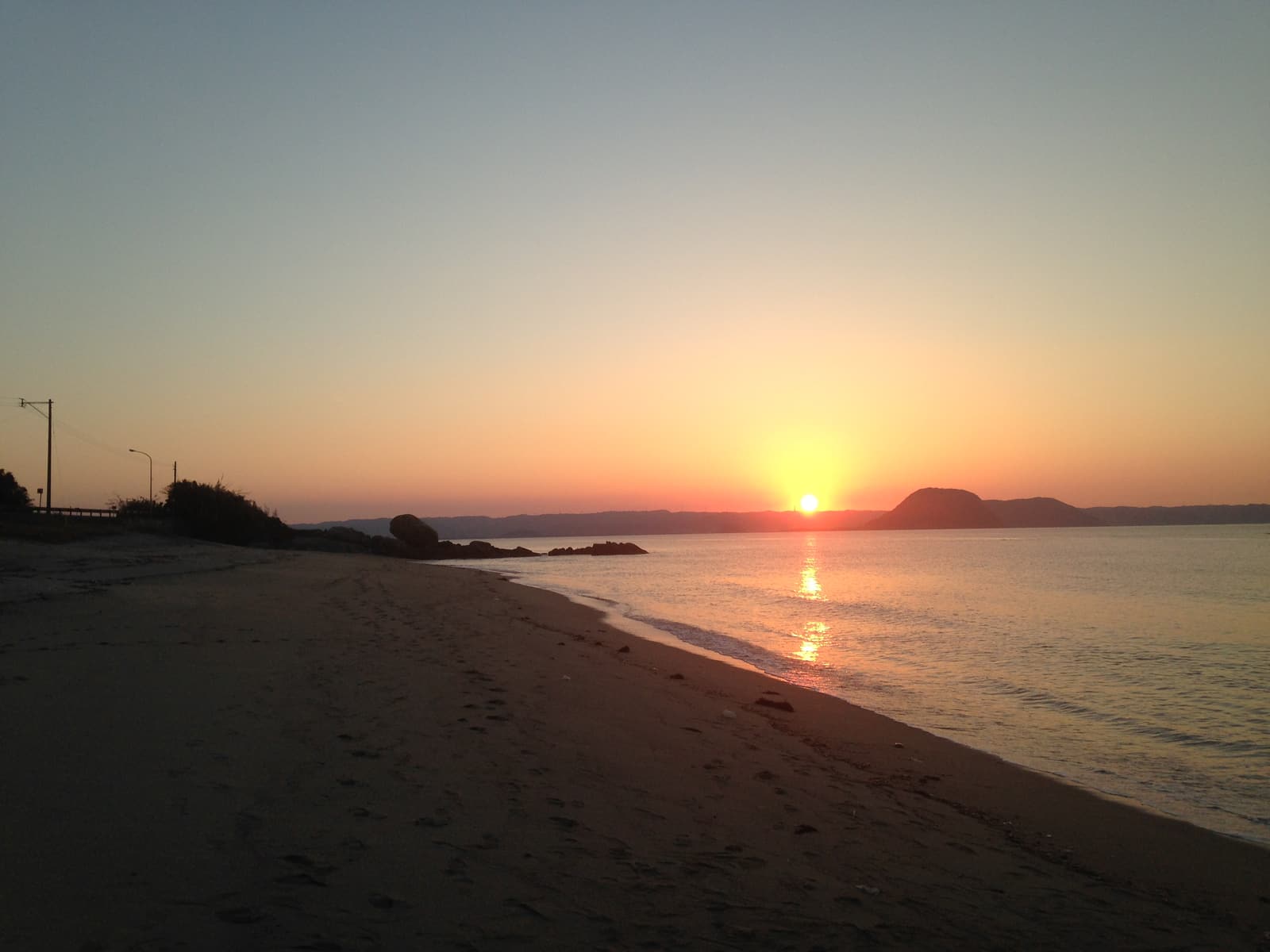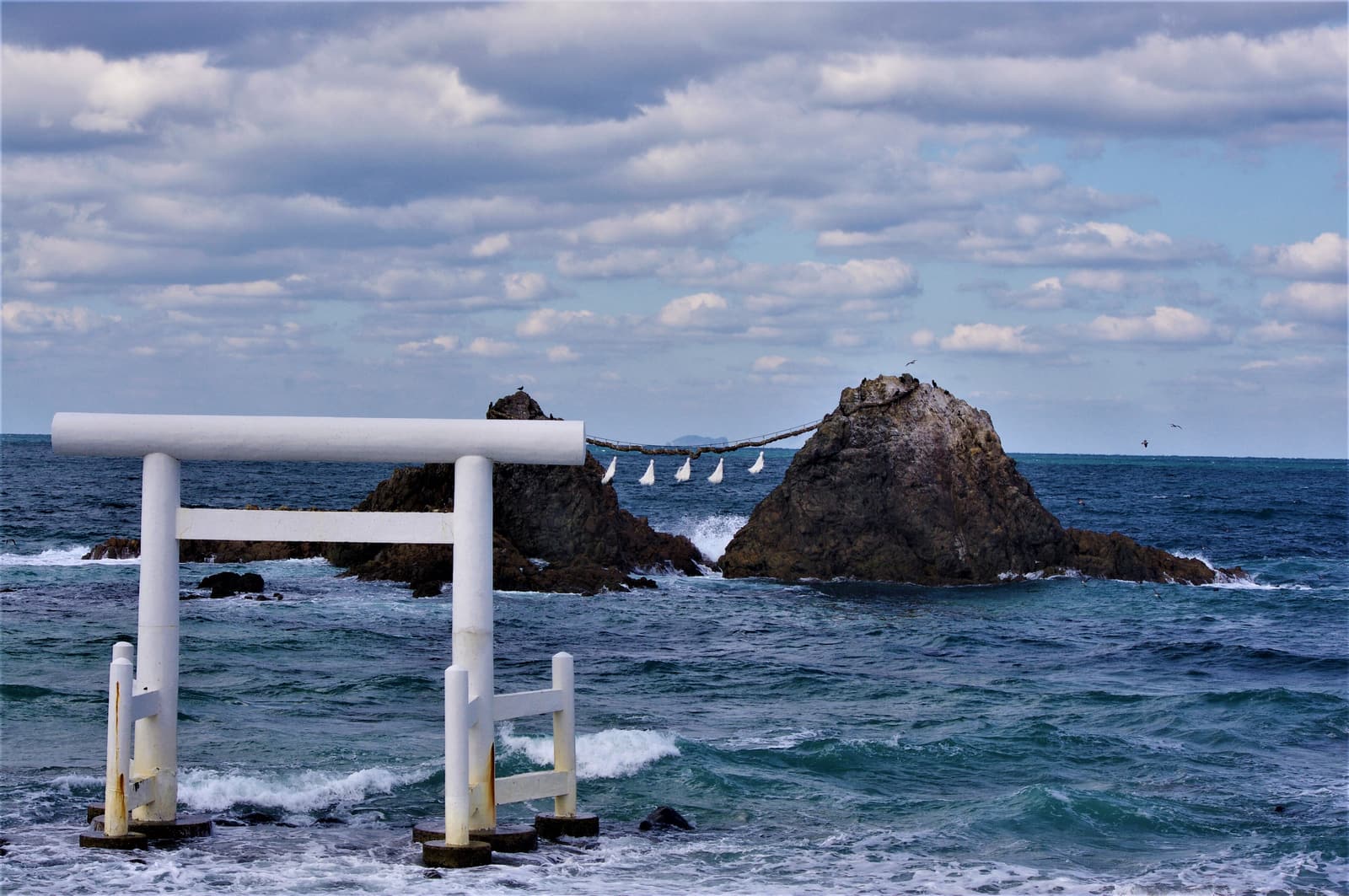
Itoshima is a city of about 100,000 people in Fukuoka Prefecture, on the north coast of Kyushu — but “city” gives the wrong idea. It was created in 2010 by merging the town of Maebaru with the rural districts of Shima and Nijo, and most of it is farmland, forested hills and coast. Fukuoka, a city of more than a million and a half, begins at its eastern edge.
The lie of the land
It helps to think of Itoshima in three parts:
- The plain and Maebaru town. The railway, the main station (Chikuzen-Maebaru), shops, the farmers’ market and the history museum. Practical rather than pretty, and where you arrive.
- The Shima peninsula, to the north. The famous coast: Sakurai Futamigaura, the Sunset Road, Nogita, Keya no Oto, the oyster ports of Kishi and Funakoshi. No railway; a car, bus or bicycle is needed.
- The hills and the Nijo coast, to the south and west. Shiraito Falls and Raizan Sennyoji in the Sefuri range, and a quieter shoreline that the railway follows towards Karatsu.
Itoshima in numbers
| Fact | Detail |
|---|---|
| Where | Fukuoka Prefecture, Kyushu, Japan — immediately west of Fukuoka city |
| Main station | Chikuzen-Maebaru (JR Chikuhi Line), 35–45 min by direct train from central Fukuoka |
| Population | About 100,000 |
| Created | 2010, from Maebaru City, Shima Town and Nijo Town |
| Sea | Genkai Sea (Sea of Japan side) — sunsets over the water |
| Signature sight | The married rocks and white torii of Sakurai Futamigaura |
| Seasonal highlights | Solstice sunset (June), beaches (Jul–Aug), maple (mid-Nov), oysters (late Oct–Mar) |
| Currency | Japanese yen (¥); cash still widely needed |
 The sunset coast
Sakurai Futamigaura
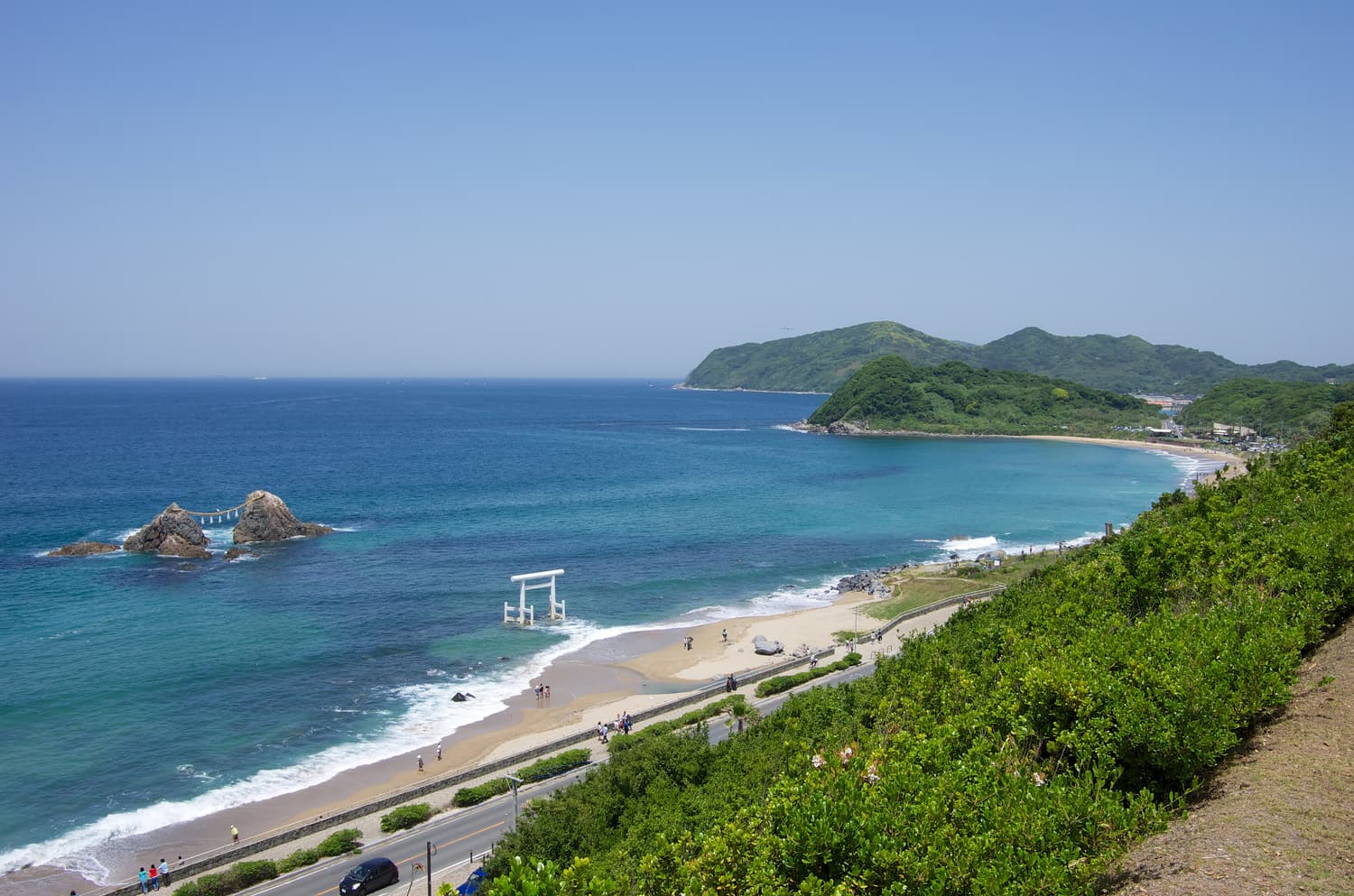
The married rocks and the white torii
Two rocks tied together by a huge sacred rope stand about 150 metres offshore, framed by a white torii gate on the beach. It is the picture of Itoshima — at its best at sunset, and above all around the summer solstice, when the sun sets between the rocks.
 The sunset coast
Sunset Road & Beach Cafés
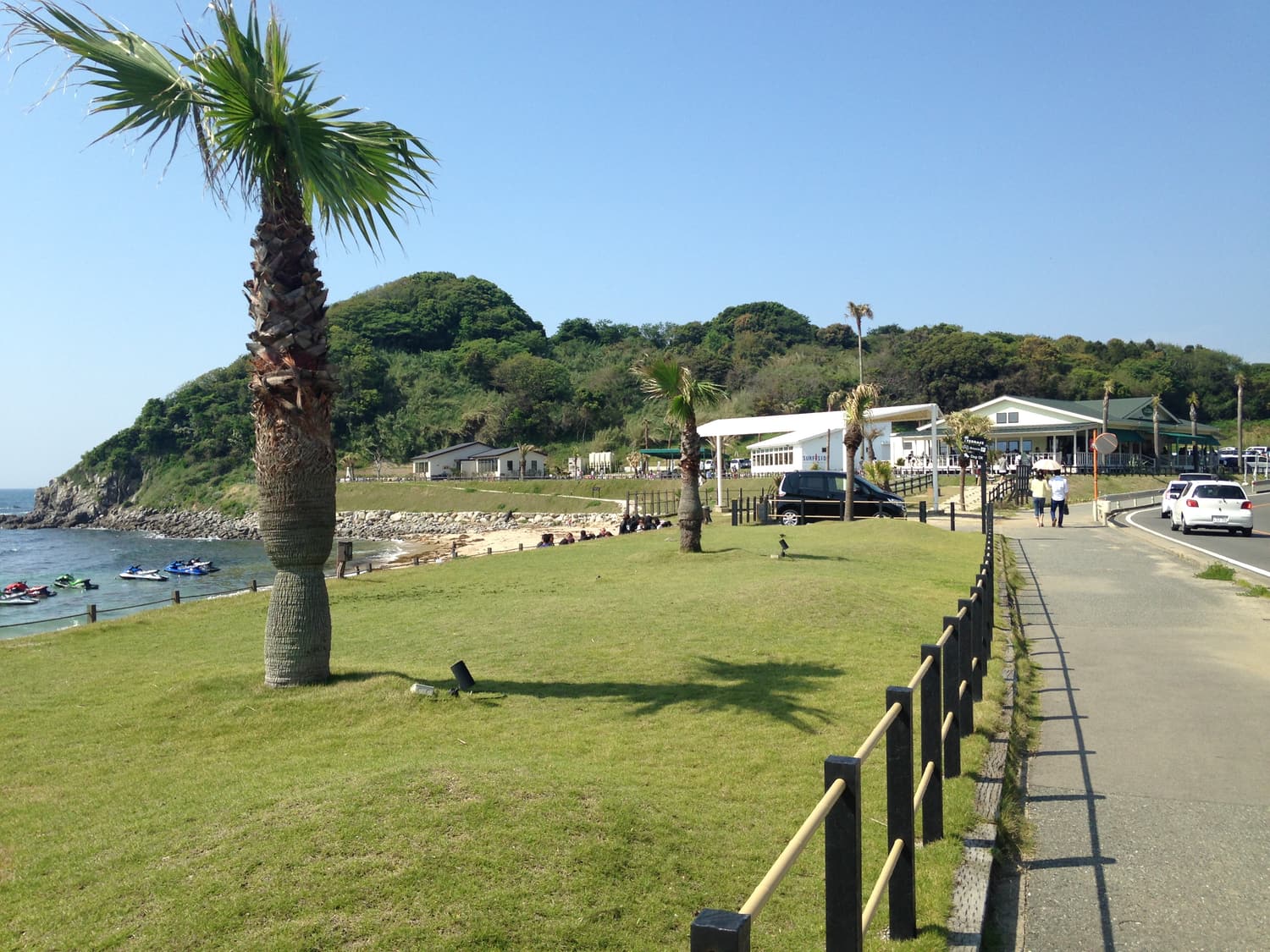
The coast road of cafés, swings and photo spots
The Sunset Road follows the north-west coast of the peninsula past beaches, surf breaks and a string of sea-view cafés — Palm Beach, the London Bus Café, Zauo and its palm-tree swing. It is the Itoshima of social media, and it is best driven or cycled slowly.
 The sunset coast
Keya no Oto Sea Cave
A basalt cathedral you enter by boat
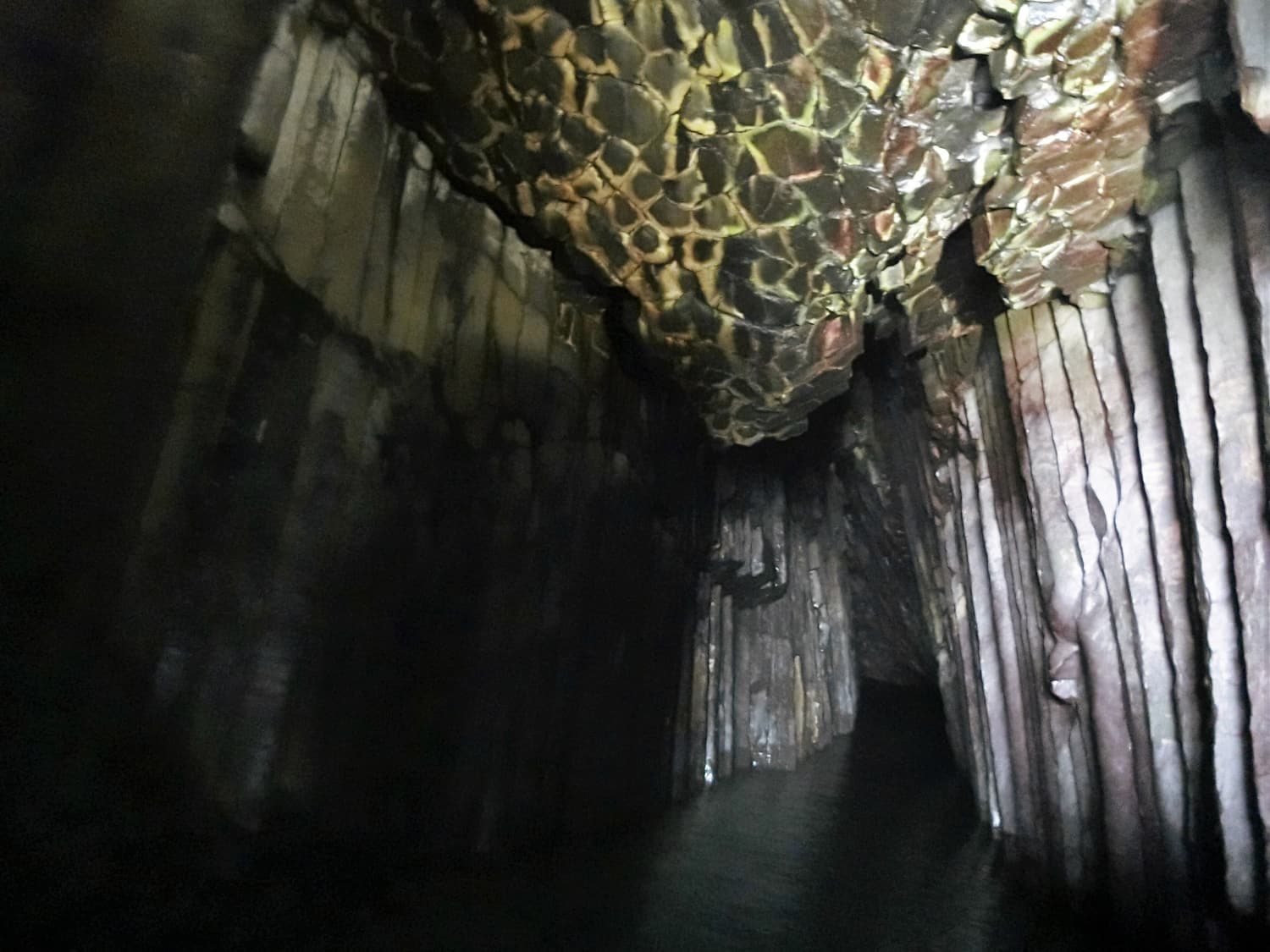
At the western tip of the peninsula a 64-metre cliff of hexagonal basalt columns rises from the Genkai Sea, pierced by a deep cave. Small sightseeing boats from Keya fishing port nose right into it when the sea allows; a short forest trail leads to a viewpoint above.
 The sunset coast
Beaches & Surfing
White sand, surf breaks and singing sand
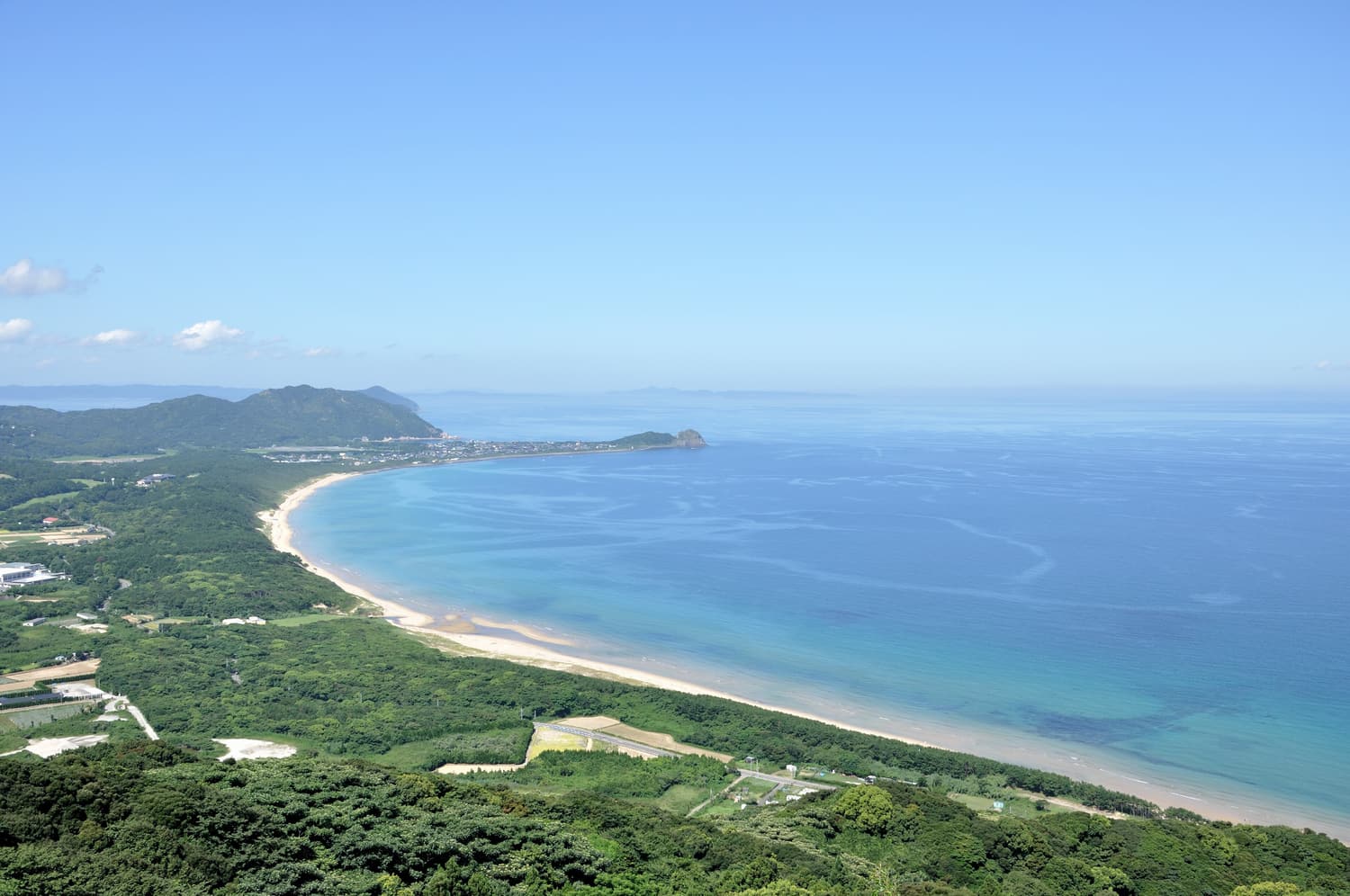
Itoshima’s north coast faces the open Genkai Sea: long white beaches, clear water and Fukuoka’s most reliable surf. Nogita is the surfers’ beach, Keya the classic swimming beach, and Anego-no-hama is famous for sand that squeaks under your feet.
A very short history
The Itoshima plain is one of the oldest stages of Japanese history. A Chinese chronicle of the third century describes a kingdom called Ito on the route between the continent and the land of Wa, and the royal tombs excavated here — above all the Hirabaru site, with its National Treasure mirrors — bear it out. You can see the finds at the Itokoku History Museum.
Mount Raizan became a centre of mountain Buddhism, of which Sennyoji is the survivor. In the Edo period the area belonged to the Kuroda lords of Fukuoka, who founded Sakurai Shrine in 1632. For most of the modern era Itoshima quietly supplied Fukuoka with rice, vegetables and fish.
Its current fame is recent. From the 2000s surfers, café owners, farmers and craftspeople moved out from the city, Kyushu University built a large campus on the peninsula’s eastern side, and photographs of the white torii and a swing between palm trees spread across social media in Japan, Korea, Taiwan and beyond.
How long to spend
- Half a day: Futamigaura and a café, or a winter oyster lunch. Easy by train and bus.
- One day: the hills in the morning, the coast in the afternoon — by car, e-bike or guided tour.
- Two days: everything above at a civilised pace, with a sunset, a beach morning, the sea cave or a hike. See where to stay.
Eating and drinking
Food is the best reason to slow down here.
- Oysters grilled at the kakigoya from about late October to March.
- Fish: Itoshima’s ports land sea bream, squid, yellowtail and more; look for seafood rice bowls and set lunches near the harbours.
- Vegetables and fruit from the farmers’ markets, and the local pork and beef that appear on café menus across the area.
- Café food: burgers, curry, bread and sweets made with local produce along the Sunset Road. Expect queues at weekends.
- Sweets: salt pudding at the Mataichi salt works, soft-serve ice cream and gelato at farm stands and beach cafés.
- Summer in the hills: nagashi-somen noodles at Shiraito Falls.
Many places close by late afternoon and one or two days a week. In the evening the choice narrows to the restaurants and bars around Chikuzen-Maebaru Station — or head back to Fukuoka for the yatai.
Money and costs
- Cash: oyster huts, market stalls, buses, small cafés and temple entrance desks are often cash-only. Carry yen in small notes and coins.
- ATMs: convenience stores and post offices in Maebaru town accept most foreign cards; there are very few machines on the coast.
- Typical spend: train from Fukuoka roughly ¥600 each way; a café lunch around ¥1,200–2,000; an oyster-hut meal about ¥2,000–3,000; temple and museum entry a few hundred yen each. Beaches, shrines and viewpoints are free. Treat all figures as approximate and check current prices.
- Tipping is not practised in Japan.
Language and connectivity
Outside the main station, English is limited; menus with photographs and a translation app go a long way, and people are patient and helpful. Mobile coverage is good across the plain and coast and patchier in the hills. Download offline maps and bus timetables before you leave the station.
Safety and health
- The sea: the open coast has waves and rip currents. Swim only at supervised beaches in season, and never wade out to the married rocks.
- Heat: July to September is hot and very humid. Carry water, wear a hat and plan the hills for the morning.
- Typhoons and heavy rain: possible from June to October. Trains and buses may be suspended; follow local advice and do not go to the coast or rivers in a storm.
- Roads: lanes are narrow, with cyclists and farm vehicles. Drive slowly; never drink and drive — Japan’s limit is effectively zero.
- Insects: mosquitoes in summer woods; on hill trails, be aware of hornets and give them space.
- Emergencies: dial 119 for ambulance and fire, 110 for police.
Etiquette
- The torii and rocks at Futamigaura and the shrines are sacred. Do not climb on them, and behave as you would in any place of worship.
- Park only in marked car parks. Blocking farm tracks and residential lanes is the biggest source of friction between visitors and residents.
- Take your rubbish with you; there are very few public bins.
- Ask before photographing people, shop interiors or private houses, and fly drones only where permitted.
- Fields, greenhouses and fishing gear are workplaces. Admire them from the road.
What to pack
- Sun protection from April to October; a windproof layer from November to March.
- Shoes with grip for the waterfall, temple steps and trails.
- Cash, a charged phone and a power bank.
- Swimwear and a towel in summer; old clothes for the oyster huts in winter.
- A cool bag if you plan to shop at the markets.
With children, and with limited mobility
Families do well here: shallow beaches, noodle-catching at the falls, the swing and the farm ice cream. Bring a car seat if you rent a car, as required by Japanese law for young children. For visitors with limited mobility, Futamigaura can be viewed from the roadside and café terraces, and the history museum and markets are step-free; the temple, the waterfall paths and the sea-cave boat involve steps and uneven ground.
Beyond Itoshima
Pair it with Fukuoka — yatai, Dazaifu and the island of Nokonoshima — or continue along the coast to Karatsu and Yobuko for a castle, a pine forest and squid.