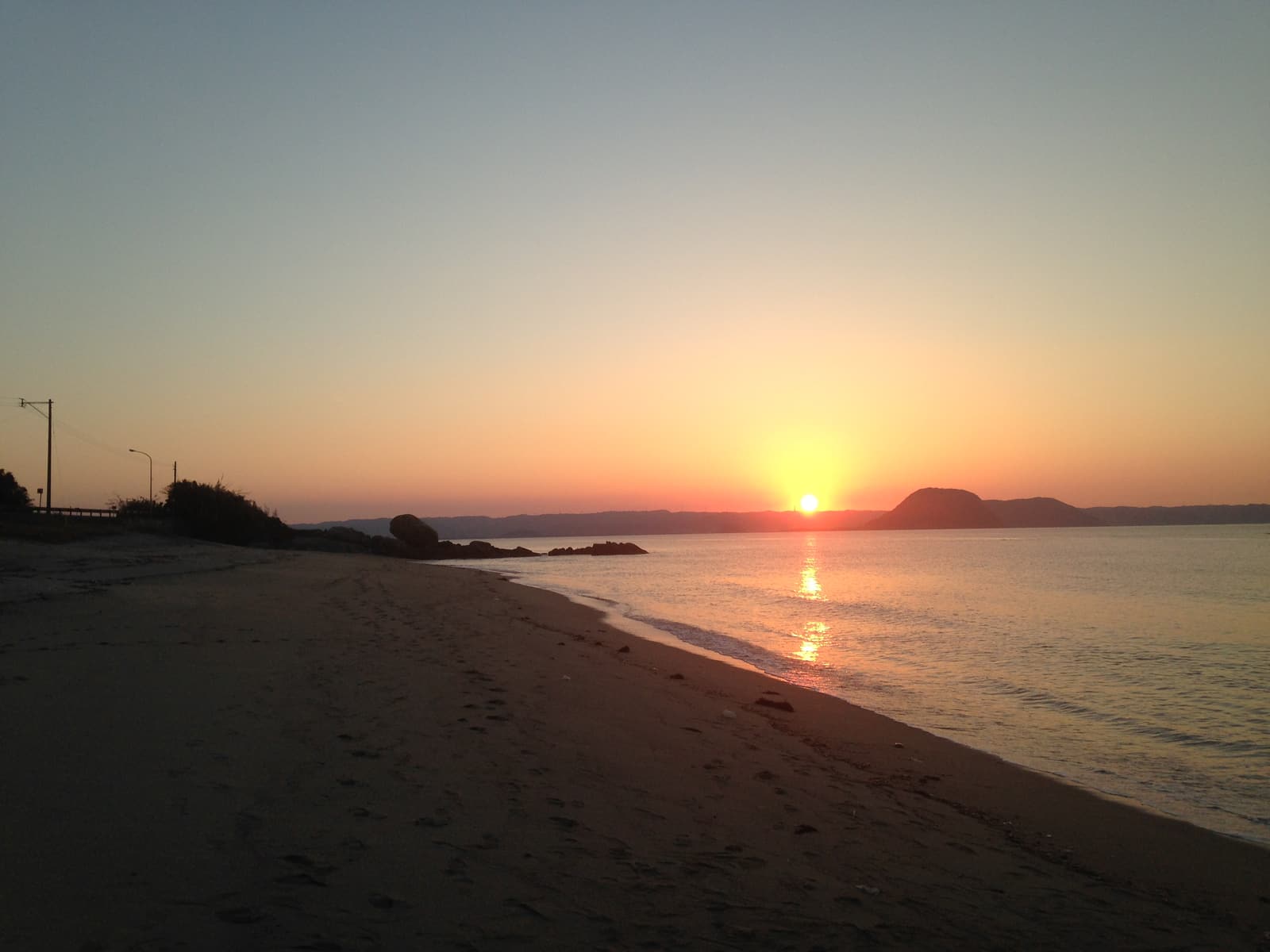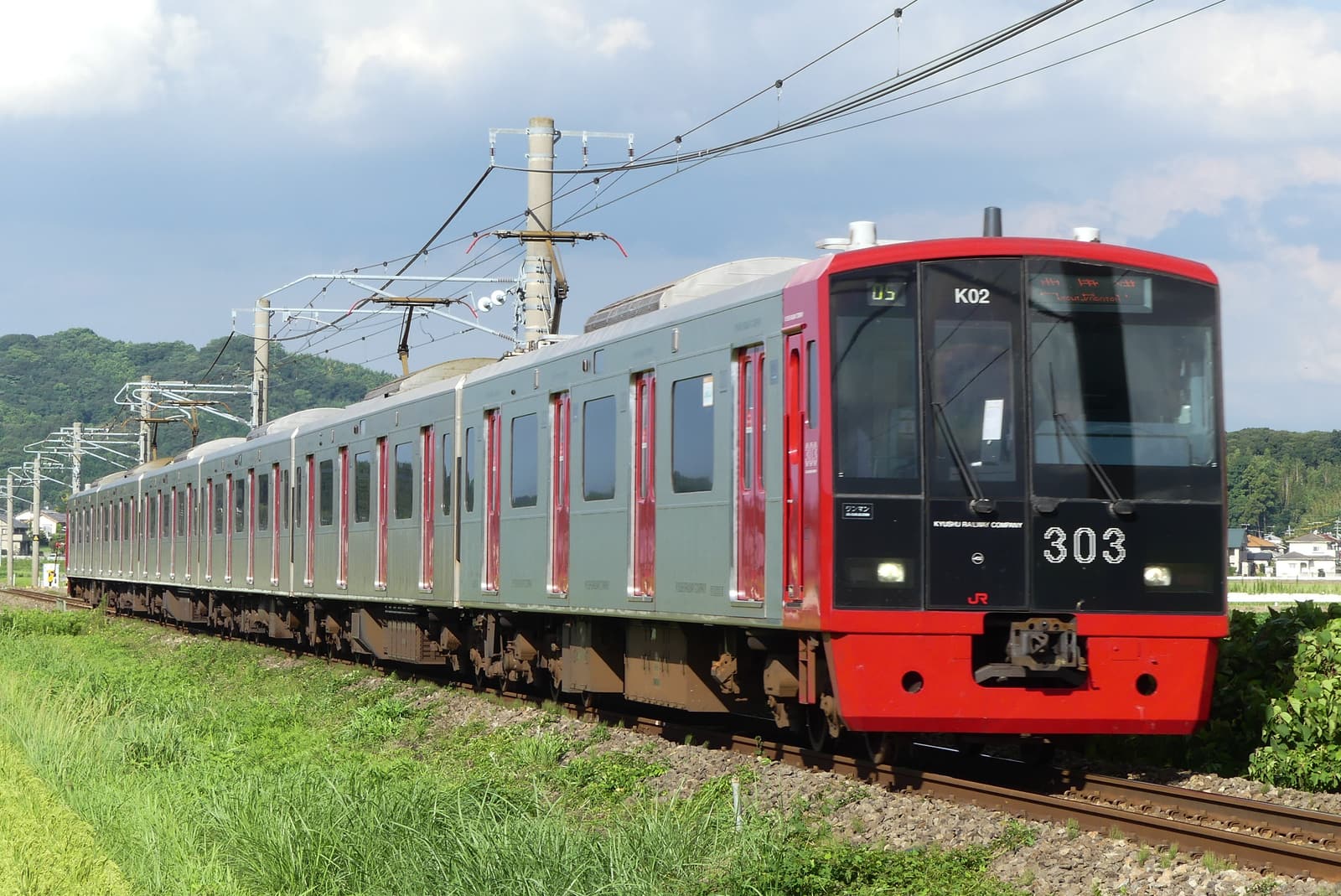
Reaching Itoshima is easy. Fukuoka’s subway Airport (Kuko) Line runs straight through onto the JR Chikuhi Line at Meinohama, so the same train that leaves Fukuoka Airport, Hakata or Tenjin carries on to Chikuzen-Maebaru, Itoshima’s main station, with no change. Getting from that station to the beaches, cafés and waterfalls is the harder part — and the part this page is really about.
Journey times at a glance
| From | Train to Chikuzen-Maebaru | Car to Futamigaura | Good to know |
|---|---|---|---|
| Tenjin | about 35 min, direct | about 40–50 min | The closest city-centre start |
| Hakata Station | about 40 min, direct | about 45–55 min | Shinkansen connections |
| Fukuoka Airport | about 45 min, direct | about 50–60 min | Subway station inside the domestic terminal |
| Meinohama | about 15–20 min | about 30 min | Where the subway becomes the JR line |
| Karatsu | about 45–50 min | about 50 min | The scenic western end of the Chikuhi Line |
By train
Board any westbound Airport Line train whose destination is Chikuzen-Maebaru, Chikuzen-Fukae, Karatsu or Nishi-Karatsu. Trains marked Meinohama stop there, where you cross the platform for the next through train. In the daytime there are several through trains an hour as far as Chikuzen-Maebaru; beyond it, towards Karatsu, they thin out to roughly two an hour.
The fare from Hakata or Tenjin is roughly ¥600 each way — check the current fare — and IC cards such as Hayakaken, SUGOCA and Suica work for the whole journey. A JR Kyushu Rail Pass covers only the JR section west of Meinohama, not the subway.
- Kyudai-Gakkentoshi: change here for the Showa Bus to Futamigaura.
- Hatae: the nearest station to the Ito Saisai farmers’ market.
- Chikuzen-Maebaru: the hub — tourist information, bicycle rental, buses, taxis and rental cars.
- Kafuri: walk to the Kafuri oyster huts in season.
- Chikuzen-Fukae and Dainyu: quiet beaches a few minutes from the platform.
- Fukuyoshi: oyster huts, a fishing port and a beach.
By bus within Itoshima
Two networks cover the area: Showa Bus and the Itoshima community bus. Fares are low, but frequencies are too — some routes run only a handful of times a day, and Sunday timetables are thinner still.
- To Sakurai Futamigaura: Showa Bus Nishinoura line from Kyudai-Gakkentoshi Station.
- To Keya (sea cave, beach): bus from Chikuzen-Maebaru Station, about 30–40 minutes.
- To Kishi and Funakoshi (oyster huts): buses from Chikuzen-Maebaru Station towards the Shima district.
- To Raizan Sennyoji and towards Shiraito Falls: community bus from Chikuzen-Maebaru Station; the falls involve a long uphill walk from the nearest regular stop.
Why a rental car helps
Itoshima is built for cars. The falls and the temple are up narrow mountain roads, the cafés are strung along 30 kilometres of coast, and almost everywhere has parking. With a car you can see in one day what takes two or three by bus.
- Rent in Fukuoka (airport, Hakata, Tenjin) or from outlets near Chikuzen-Maebaru Station — the second option avoids city driving and expressway tolls.
- Japan drives on the left. Most foreign visitors need an International Driving Permit issued under the 1949 Geneva Convention; holders of licences from a few places, including Taiwan, Germany, France and Switzerland, need an official Japanese translation instead. Licences from places that do not issue such permits, such as mainland China, cannot be used to drive in Japan. Check the rules for your licence before you travel.
- From central Fukuoka, the urban expressway and the Nishi-Kyushu Expressway (toll) bring you to the Maebaru interchange in about 30 minutes.
- Expect queues on fine weekends: the road to Shiraito Falls in August, Sennyoji in mid-November, the oyster ports in January and February, and Futamigaura at sunset in June.
By e-bike
For one or two fit travellers, an electric-assist bicycle is the best car-free answer. Rental bicycles and e-bikes are available around Chikuzen-Maebaru Station — ask at the tourist information desk — and the plain is flat and laced with quiet farm roads. Futamigaura is roughly 14 km from the station, Keya about 13 km; a Sunset Road loop taking in both is a full day of 40 km or more with real hills. Ride on the left, carry water, and return the bike before the shop closes.
By taxi
Taxis wait at Chikuzen-Maebaru Station. They are a sensible way for three or four people to reach Raizan Sennyoji, the oyster huts at Kishi or the history museum; the coast is further and costs several thousand yen each way. Arrange your return pickup in advance, as you will not find a cruising taxi at the beach.
By guided tour
If you do not want to drive and only have one day, a coach day trip from Fukuoka is the most efficient option: it covers the hills and the coast and costs little more than the trains, buses and taxis you would otherwise piece together. See our ranked comparison.
Half-day and full-day plans from Fukuoka
- Half day, no car (any season): train to Kyudai-Gakkentoshi, bus to Futamigaura, an hour or two at the beach and cafés, and back the same way.
- Half day, no car (winter): train to Kafuri or Fukuyoshi and a long lunch at the oyster huts.
- Full day by e-bike: Chikuzen-Maebaru, Ito Saisai market, Sakurai Shrine, Futamigaura and back along the coast.
- Full day by car: Shiraito Falls and Sennyoji in the morning, lunch on the plain, then the Sunset Road from Keya to Futamigaura for sunset.
- Two days: add the Keya no Oto boat, a hike up Tateishi-yama, the history museum — or carry on by train to Karatsu.
Arriving from further away
- By air: Fukuoka Airport (FUK) has domestic flights from all over Japan and international flights from Seoul, Busan, Taipei, Hong Kong, Shanghai, Bangkok and other Asian cities. International passengers take the free shuttle to the domestic terminal for the subway.
- By Shinkansen: Hakata is the western terminus of the Sanyo Shinkansen from Osaka and Hiroshima and the start of the Kyushu Shinkansen to Kumamoto and Kagoshima.
- By ferry from Busan: ships arrive at Hakata Port, a short bus or taxi ride from Hakata and Tenjin.