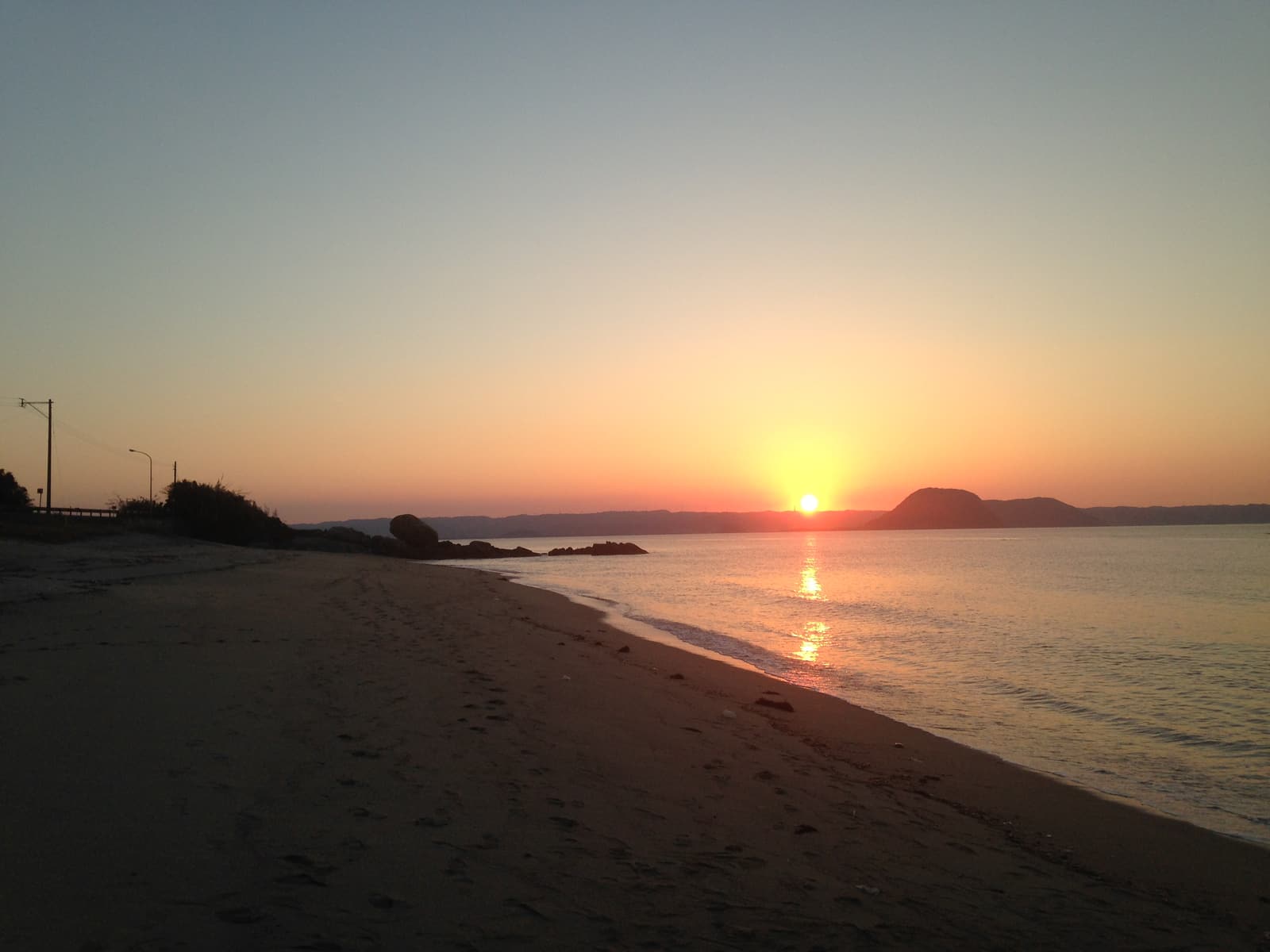
Itoshima is a year-round destination that changes character completely with the calendar. Summer is beaches and noodles at the waterfall; winter is oysters at the harbour and sharp, clear sunsets. The most comfortable weather comes in April–May and October–November. What you most want to do should decide when you come.
The year at a glance
| Season | Weather | Best for | Watch out for |
|---|---|---|---|
| March–May | Mild, about 12–24°C by day; some rain | Cherry blossom, fresh green, cycling, the sea-cave boat restarting | Golden Week crowds (late April–early May) |
| June–mid-July | Rainy season: warm, humid, frequent rain | Solstice sunset between the rocks, hydrangeas at Shiraito Falls | Cloudy evenings; heavy downpours |
| Mid-July–August | Hot and humid, around 30–33°C | Swimming, beach houses, nagashi-somen in the hills | Weekend traffic, heat, the Obon holiday in mid-August |
| September–October | Warm easing to mild; typhoons possible | Surfing, quieter beaches, hiking as it cools | Storm disruption; jellyfish in early autumn |
| November | Cool and often clear, about 10–18°C | The great maple at Sennyoji, the first oysters | Queues on the temple road at peak colour |
| December–February | Cold and windy, about 4–11°C; occasional snow in the hills | Oyster huts at their best, crisp sunsets | No sea-cave boat; short café hours; icy mountain roads |
Spring (March to May)
Cherry trees flower from about late March to early April, and by May the hills are a vivid green — the maple at Sennyoji is beautiful in new leaf and almost deserted. The Keya no Oto boats usually start again around mid-March. In late April or early May, at a spring low tide, the great rope between the married rocks is renewed in a ceremony at Futamigaura; the date changes each year. Avoid the Golden Week holidays if you dislike traffic.
Rainy season and the solstice (June to mid-July)
The tsuyu rains usually arrive in early June and last until mid-July. It is not constant rain, but grey days are common. This is nevertheless when Itoshima’s single most famous sight occurs: around the summer solstice the sun sets between the married rocks, at roughly half past seven in the evening. Give yourself two or three possible evenings rather than one. The same weeks bring hydrangeas and full flow to Shiraito Falls.
High summer (mid-July to August)
The official beach season: lifeguards, beach houses, paddleboards and long evenings. It is also hot — plan the waterfall for the middle of the day, when the hills are several degrees cooler. Weekends and the Obon week in mid-August are the busiest days of the year on the coast road; go on a weekday or start early.
Autumn (September to November)
September is still summer in all but name, with the added possibility of a typhoon. October is the most reliable month for clear, mild days — ideal for hiking and cycling — and the surf picks up as autumn swells arrive. The oyster huts begin to open from about late October. In mid-November the giant maple at Sennyoji turns red and the temple road fills; go on a weekday, early.
Winter (December to February)
Cold north-westerly winds blow off the sea, the sky is often grey, and now and then it snows in the hills. This is nonetheless a high season of its own, because of the oyster huts: January and February weekends see queues at Kishi. On clear days the winter light is superb and the beaches are empty. The sea-cave boat does not run, and many cafés shorten their hours.
Sunset times
As a rough guide, the sun sets at about 17:10–17:30 in December and January, around 18:30 at the spring and autumn equinoxes, and about 19:30 in late June. Check the exact time for your date and arrive at least half an hour early.
When to avoid
- Golden Week, Obon and three-day weekends: long queues for roads, parking and tables.
- Typhoon days: do not visit the coast; transport may be suspended.
- Days with one inflexible plan: the boat, the solstice sunset and the paragliding all depend on the weather. Keep a backup — the history museum, a market, a long lunch.